









When Malcolm and Karen Turnbull founded Loadbalancer.org in 2003, their ambition wasn't to build the biggest application delivery company in the market — it was to build one of the most trusted.
That philosophy has shaped everything the company has become. Building its reputation by focusing on engineering excellence, long-term customer relationships, and delivering technology that simply works. Helping its partners support critical infrastructure such as hospitals, airports and, more recently, some of the world's largest and fastest multi-site object storage systems for data centers.
"Because when it comes to your critical applications — a single point of failure is never an option."
Today, the company announces the next step in that journey.
Joshua Turnbull has been appointed Managing Director, effective 1st July 2026, as part of a planned leadership transition that sees founders Malcolm and Karen Turnbull step back from the day-to-day running of the business while remaining closely involved in its long-term direction.

Having spent the last five and a half years helping lead the company's commercial growth, international expansion and strategic partnerships, Josh will now work alongside the existing leadership team to guide the next phase of Loadbalancer.org's evolution.
Rather than representing a change in direction, the appointment reflects a continuation of the principles that have underpinned the business since its founding. Putting customers first, investing in people, solving real-world infrastructure challenges, and building long-term partnerships.
While the technology landscape has changed dramatically over the past two decades—from physical data centres to hybrid cloud, Kubernetes, AI infrastructure and software-defined platforms—the company's mission has remained remarkably consistent: helping organisations keep their most important applications available, secure and resilient.
The next chapter builds on those same foundations.
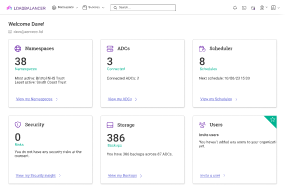
Loadbalancer.org will continue investing in product innovation through initiatives such as the vendor-neutral ADC Portal and the next generation Endurance load balancer. It will also expand its global partner ecosystem and help organizations modernize increasingly complex hybrid and cloud-native environments.
The company's ambition is not simply to grow, but to continue being the trusted specialist that customers choose when reliability matters most.
"This isn't about changing what has made Loadbalancer.org successful. It's about building on more than two decades of trust, engineering excellence and customer relationships while preparing the business for the next generation of infrastructure.
Technology will continue to evolve—from AI to cloud-native applications and automation—but the principles that have guided this company since 2003 remain exactly the same. We will continue investing in our people, our products and our partners, while helping customers solve increasingly complex infrastructure challenges without unnecessary complexity." Joshua Turnbull, MD of Loadbalancer.org.
The leadership transition represents the evolution of a business that has remained privately owned, engineering-led and customer-focused since its inception. As Loadbalancer.org approaches its 25th anniversary, the company enters its next chapter with the same values that shaped its first year—combining technical excellence with personal service, trusted partnerships and a relentless focus on helping customers keep their critical applications online.
"Loadbalancer has stayed true to its core product sector for more than two decades... The steady application of focused development based on close interaction with partners and customers will ensure it's still doing its thing in another two decades." Chris Mellor, Editor of Blocks and Files.
Interview with Joshua Turnbull: The future of application delivery, infrastructure and growth
Strategy
Q: The application delivery market continues to evolve rapidly. Larger vendors such as F5 and Citrix have expanded into broader platforms, while organizations are adopting hybrid and cloud-native architectures. How does Loadbalancer.org differentiate itself in this environment?
"One of our biggest strengths is that we remain focused. Over the years, many vendors have expanded into increasingly broad portfolios. While that approach works for some, we're hearing a consistent message from customers: they want simplicity, transparency and specialist expertise.
Application delivery remains a critical component of modern infrastructure. Whether workloads are running on-premises, in the cloud or across multiple environments, organizations still need resilience, performance and security.
Our role is to help customers achieve those outcomes without introducing unnecessary complexity. We believe there is a significant opportunity for specialist vendors that can deliver enterprise-grade capabilities while remaining easy to deploy, manage and support.
We're also seeing a major shift in infrastructure strategy. Rather than viewing hybrid environments as a temporary stepping stone to the cloud, many organizations are now designing hybrid infrastructure as a long-term operating model. That plays directly to our strengths.
The next five years represent a significant growth opportunity for Loadbalancer.org as organizations seek trusted partners who can help simplify increasingly complex infrastructure environments."
Product
Q: How do the ADC Portal and Endurance fit into the company's long-term strategy?
"These products represent an evolution of how we help customers manage and deliver applications.
Historically, many customers deployed load balancing to solve a specific availability challenge. Today, organizations are looking for broader operational visibility, automation and control across their infrastructure.
The ADC Portal provides a vendor-neutral platform, to remove the pain of managing your existing F5, Citrix NetScaler and Kemp ADCs. For organizations operating across multiple sites, regions or cloud providers, having a single view of that infrastructure becomes increasingly valuable.
Endurance — our next-generation load balancer is equally important because it has been designed with modern operational requirements in mind. Automation, APIs and infrastructure-as-code are no longer niche requirements; they are becoming standard practice across enterprise IT.
What excites me most is that these investments allow us to engage with a wider audience inside our customers' organizations. Alongside traditional infrastructure teams, we're increasingly working with platform engineers, DevOps teams and cloud architects who are looking for flexible, automated application delivery solutions.
Ultimately, our goal is simple: make it easier for organizations to deploy, manage and scale critical applications regardless of where those applications run."
Healthcare, storage and new markets
Q: Loadbalancer.org has built strong positions in healthcare and enterprise storage. Will those remain key priorities?
"Absolutely. Healthcare remains one of our most important markets. Over many years we've developed deep expertise supporting clinical systems, medical imaging platforms, electronic patient records and other mission-critical healthcare applications.
As healthcare organizations face increasing cybersecurity threats, growing data volumes and greater operational demands, the need for resilient infrastructure has never been greater. We intend to continue investing heavily in this sector and strengthening our relationships with healthcare providers and technology partners globally.
The same applies to enterprise storage.
We've built strong partnerships across the object storage ecosystem and support some of the world's largest storage deployments. As storage architectures evolve towards hybrid and multi-cloud models, customers need the same levels of availability, resilience and operational simplicity they have always relied upon from us.
At the same time, we're seeing growing opportunities in sectors such as financial services, managed services, government, transport and digital services.
What's particularly encouraging is that these opportunities are not the result of entering completely new markets; they're a natural extension of the challenges we've already been solving successfully for years."
Partnerships and the future
Q: What does success look like for Loadbalancer.org over the next five years?
"Success starts with continuing to earn the trust of our customers, partners and employees.
We have ambitious growth plans, but those ambitions are built around sustainable, long-term relationships rather than short-term objectives.
Over the next five years, I want to see Loadbalancer.org continue strengthening its position as the trusted application delivery partner for organizations that require reliability, flexibility and exceptional support.
We'll continue investing in our technology, expanding our global partner ecosystem and helping customers modernise their infrastructure without unnecessary complexity.
Most importantly, we'll continue building a business that stays true to the values that have brought us this far: technical excellence, customer focus, strong partnerships and a commitment to doing the right thing.
The opportunity ahead is significant, and we're excited about what comes next."
Media enquiries: marketing@loadbalancer.org.


Related posts
Why does a one-star review cut so deep?

HPE Ezmeral and Loadbalancer forge strategic alliance to strengthen performance

Announcing Loadbalancer.org's new partnership with HPE GreenLake
Lessons from InfoSec 2023: how to prevent a cyber crisis with a defense-in-depth strategy
High zero-day in Citrix NetScaler ADC & Gateway: Patch CVE-2026-88779

Critical zero-day in F5 BIG-IP APM: Emergency CVE-2026-94127 hotfixes released
Critical zero-days in Citrix NetScaler ADC & Gateway: Patch CVE-2026-88771 and CVE-2026-88772 immediately
The ultimate VMware NSX alternative: Nutanix + Loadbalancer.org