









Latest post
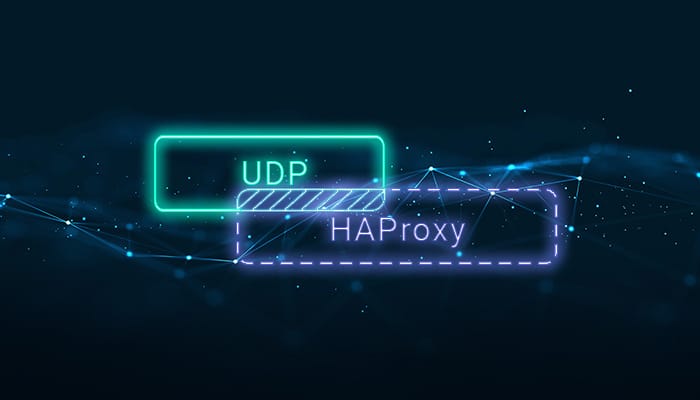
How can I load balance UDP with open source HAProxy?
UDP is a connectionless protocol, meaning it doesn't establish a formal connection or 'handshake' before sending data...
Find step-by-step technical guides and tutorials for load balancer configuration. Learn how to master Layer 4, 7 and GSLB, automate deployments with our API/CLI, and configure advanced features like SSL termination, health checks, and HA clustering.


Cloudflare provides a content delivery network (CDN). A CDN is a worldwide network of servers that delivers web content to clients based on the geographic location of the client...


Load balancing NFS is a real pain; especially when it comes to the locked mounts issue. In this blog I'll explain how to create a highly available NFS server for Kerberos...

The Loadbalancer.org Feedback Agent is installed on the Session Host servers to provide real time performance stats to enable optimum load distribution...

The Loadbalancer.org appliance automatically detects changes in your auto-scaling groups, with zero configuration and zero downtime...


In the Azure Management Portal, select the Virtual Machines option, click on the newly deployed Load Balancer VM, click on Network interfaces and then select the network interface attached to the load balancer, then click IP configurations and ensure that IP forwarding is Enabled...


The WAF addresses the OWASP Top 10 vulnerabilities and is very quick and simple to deploy...


Nutanix offers a hyper-converged infrastructure (HCI) platform that integrates virtualization, computing, networking, storage, and security resources into a single system...

L3 DSR is an alternative technique to achieve direct server return at Layer 3. Instead of using an IPIP tunnel like LVS-TUN it changes the destination IP address like LVS-NAT when sending the traffic to the real server...


You can check directly what customers having been telling Gartner about Loadbalancer.org, JetNexus, Barracuda Networks and Kemp Technologies on the new Peer Insights platform...

LVS-DR and LVS-TUN are both forms of Direct Server Return where the load balancer only has to deal with one half of the connection...

Automation is very important for many organisations, which is why it's one of the core features of our upcoming V9 release...

Security through obscurity is not a great idea when it is your ONLY protection technique. For example moving your SSH port from 22 -> 23 won't fool any hackers for long! However, I've always liked putting a 'double login' in front of important web sites to frustrate simple automated hacking tools...